Home · 5 min read
ADHD and losing your keys, phone and wallet: give them one place to land

Author of When You Lose Track and creator of the Built to Restart Method
5 min read · Published
Why the same three things keep disappearing
Keys, phone and wallet move more than anything else you own. They come in and out of the house every day, they get put down at the exact moment your attention is already moving on, and they are small enough to fit on any surface.
The NHS lists losing things often, like your wallet, mobile or keys, among the signs of ADHD in adults, next to being easily distracted or forgetful. Research on executive function points the same way: many people with ADHD have weaker working memory and planning, though not everyone does. Putting the keys down is automatic. Knowing later where you put them depends on noticing at that moment, which is exactly when attention has gone somewhere else.
None of this makes it a character flaw. It does mean that a plan which relies on remembering where things are will fail on the days you most need it, the late ones.
Build one launch zone
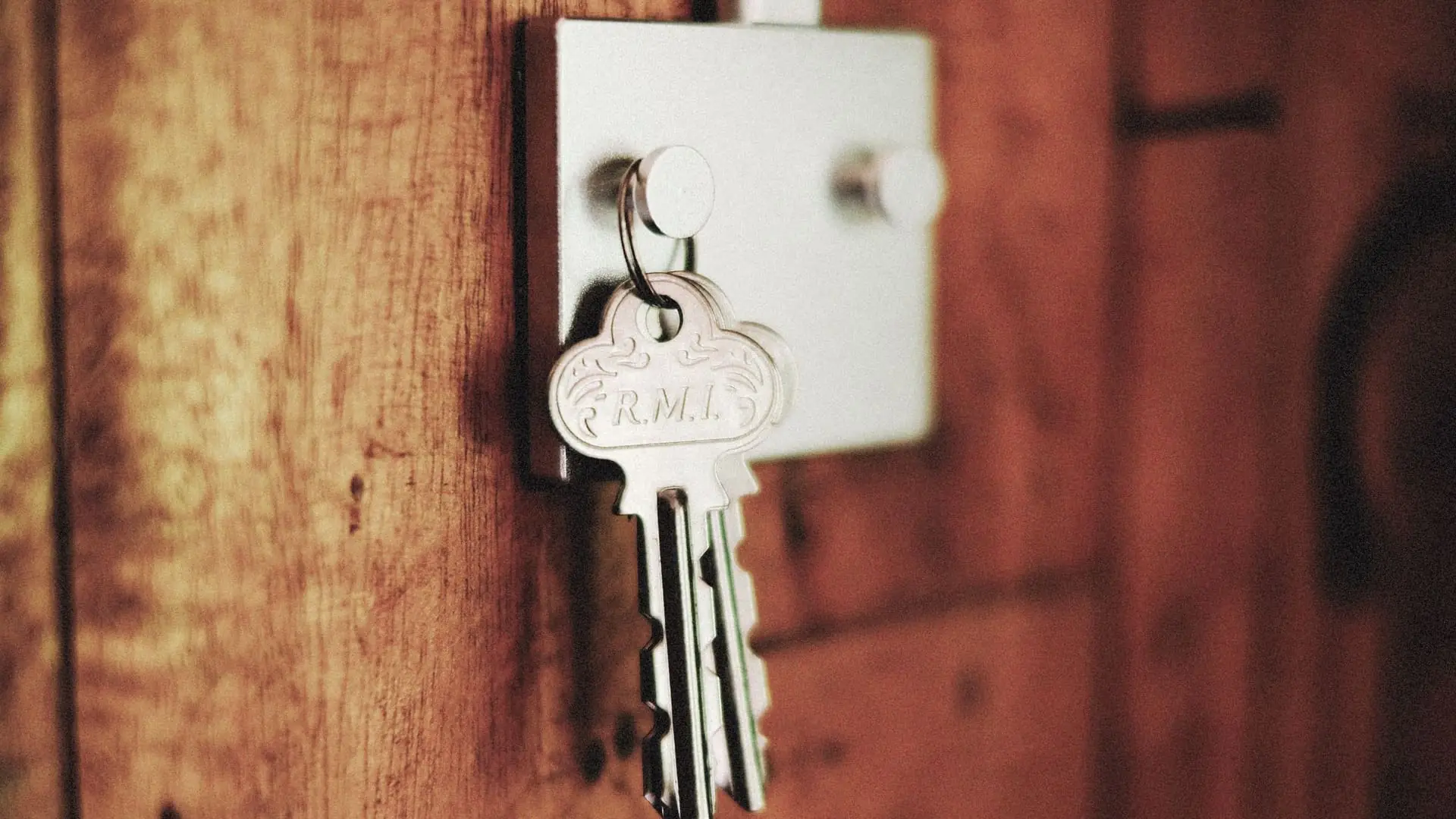
Chapter 13 of the book describes a launch zone: one small area by the door for keys, bag, identification, travel card and the items leaving tomorrow. It is one of the things the book uses to define a home that works: keys and essential items have a visible home.
A few details decide whether it works.
- Put it on the way in. If the keys have to travel to another room to reach their place, they will stop on the first surface instead.
- Keep it open and visible. Hooks, a bowl or an open tray beat a drawer or a lidded box. Every extra step is a place to stall.
- Keep it small. A launch zone that also holds mail, receipts and shopping bags gets buried in a week.
- Make it the only place. Two places for keys means two places to check.
Dana, in the book, had stored things where a magazine kitchen keeps them. The redesign stored them where her hands actually let go of them, and that is the test for a launch zone too.
Shorten the trip back
The book counts the steps between using an item and putting it back. Each step is a chance to stall, so the fix is fewer steps, not better intentions.
For the phone, that might mean a charger where you sit in the evening and another by the bed, so the phone always has somewhere sensible to be. For glasses, a case in each room you read in. The book suggests duplicates of inexpensive essentials in places where you keep needing them. A spare key, given to someone you trust or kept in a safe place, turns a lost key from an emergency into an errand.
Safety comes first. Do not make medication, chemicals, sharp objects or sensitive documents easier for children, pets, visitors or anyone at risk to reach. If keys hang by the door, put the hook where it cannot be seen or reached from the letterbox or a window.
A short search order for the late mornings
Even a good launch zone will miss sometimes. When it does, searching everywhere at once, in a panic, tends to mean checking the same three places twice. Decide the order in advance, so the late morning does not have to plan anything.
- The launch zone.
- Pockets of what you wore last.
- The bag you carried.
- The place you last came in, including the car.
- The last surface you used, often kitchen counter, bathroom or bed.
Say each place out loud as you check it. It slows the panic enough that you actually look. Write the order on a card inside the door if that helps. When you find the item, put it back in the launch zone before you leave, even if you are late. That is the moment the system gets stronger.
A cue plan can help with the putting down itself. Research on implementation intentions, plans written as when X happens I will do Y, shows they help people carry out intended actions. It is general research, not ADHD specific. Written for this, it might read: when I close the front door behind me, the keys go on the hook.
When it goes wrong anyway
Some weeks the launch zone gets buried, the phone lives in the sofa and the wallet turns up in the freezer. That says the week was hard, not that the zone failed. Restart it the way the book restarts a home: clear the zone, put the three items back, and stop there. The book's Low Power idea, protecting a few functions first, applies here too.
If you keep losing things after setting up a launch zone, look at the design before your memory. Is the zone on the way in? Is it open? Is it the only place? Adjust one thing and try another week.
Questions people ask
Is losing things a sign of ADHD?
Yes, losing things often is one of the listed signs of ADHD in adults. The NHS page on adult ADHD names losing things like your wallet, mobile or keys, alongside being easily distracted or forgetful. Everyone loses things sometimes, and losing things alone does not mean you have ADHD. A diagnosis needs an assessment by a qualified professional that looks at many signs over time.
How do I stop losing my keys with ADHD?
Give keys one visible place to land, right where you come in, and make putting them there easier than putting them anywhere else. The book calls this a launch zone: keys, bag, ID, travel card and anything leaving tomorrow, in one open spot by the door. Hooks or an open tray work better than a drawer, because a closed drawer adds a step you will skip on a tired evening.
Why do I keep losing my phone in my own house?
Usually because the phone gets put down wherever your attention moved on, with no fixed place to return to. The fix is a place where you actually let go of it, such as a charging spot where you sit in the evening, rather than where a tidy home says it belongs. A second charger in the room you use most removes a reason to carry it around.
What should I do when I cannot find my keys and I am late?
Run a short search order instead of searching everywhere twice. Check the launch zone, then the pockets of what you wore last, then the bag, then the place you last came in, then the last surface you used. Say each place out loud as you check it. If you have a spare, use it and search later. Afterwards, put the found keys back in the launch zone.
Are item trackers useful for ADHD?
They can help some people find a lost item faster, especially a wallet or keys that leave the house. A tracker does not stop the item from being put down in random places, and it needs charging or batteries, which is one more thing to remember. Treat it as a backup to a fixed landing spot by the door, not a replacement. No study has tested trackers for ADHD.
Sources and further reading
- NHS. ADHD in adults. NHS website; page last reviewed 19 March 2025. Open source
- Willcutt EG, Doyle AE, Nigg JT, Faraone SV, Pennington BF. Validity of the executive function theory of attention-deficit/hyperactivity disorder: a meta-analytic review. Biol Psychiatry. 2005;57(11):1336-1346. Open source
- Gollwitzer PM. Implementation intentions: strong effects of simple plans. Am Psychol. 1999;54(7):493-503. Open source
- National Institute for Health and Care Excellence. Attention deficit hyperactivity disorder: diagnosis and management. NG87. 2018, updated 2019. Open source
How claims on this site are graded, from established to personal experiment: Research.