Routines · 5 min read
ADHD and travel: packing, travel days and getting back into routine

Author of When You Lose Track and creator of the Built to Restart Method
5 min read · Published
Why trips break routines
A routine leans on more than willpower. It leans on the place, the time and the objects around you: the kettle that starts the morning, the desk where the planner sits, the hook by the door. A trip takes all of that away at once.
The book uses travel as one of its examples of how one-mode systems collapse on schedule. A weekly review that needs forty-five quiet minutes works for two weeks. Then travel, a sick child or a bad stretch of sleep, and the review is missed. Now the next review needs the usual time plus repair, plus exposure to everything that did not happen.
That is the second break, the one at home. The trip itself might go fine. Coming back to a planner full of missed days is what keeps the routine from restarting.
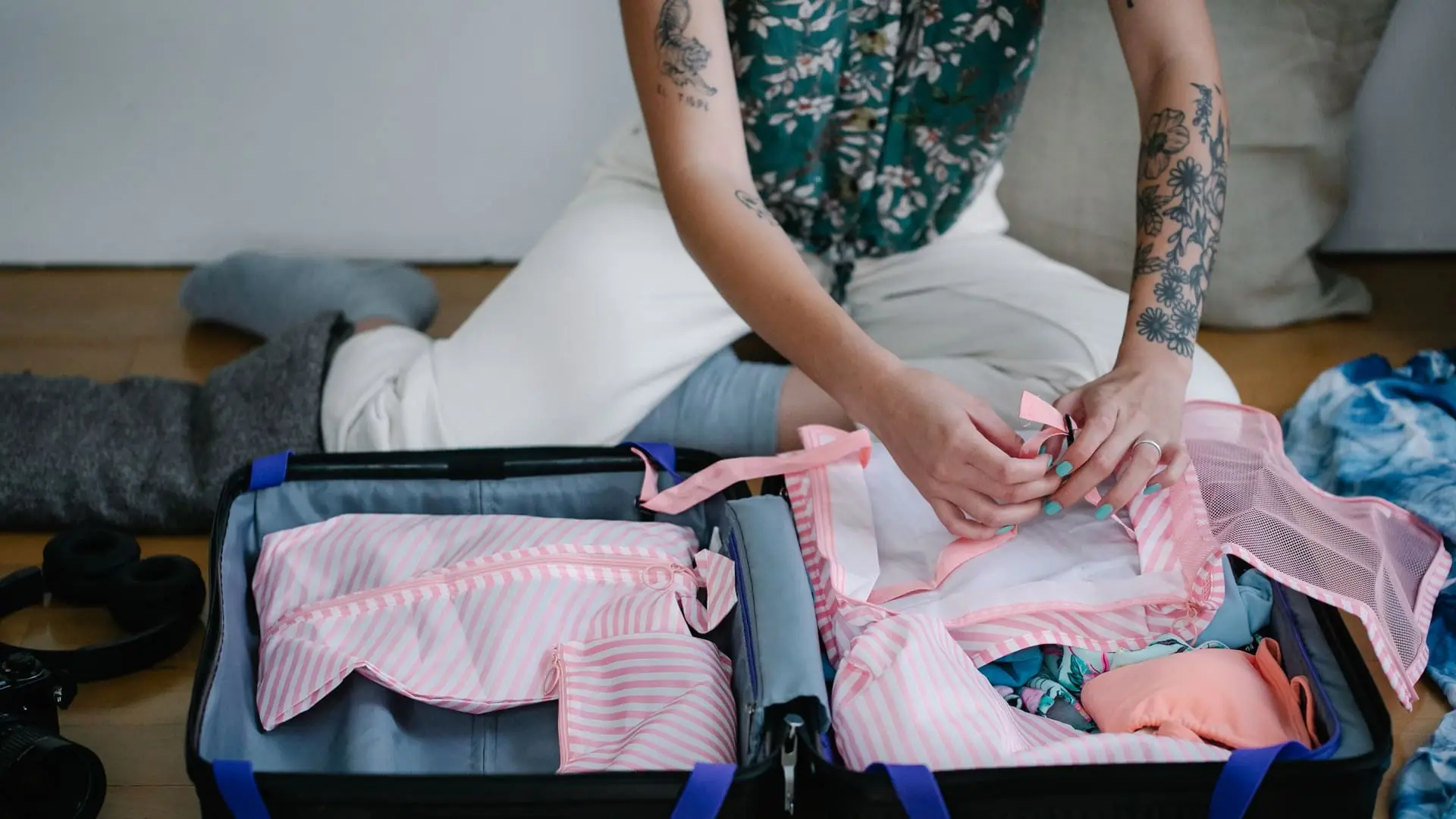
Before you go: pack from a list, essentials first
Packing from memory asks working memory to hold a long list while you are also tired, rushed and thinking about the trip. A list that lives outside your head does that job better, and it gets better every time you correct it.
Keep one master list, on your phone or printed, and reuse it. Order it by what would hurt most to forget:
- Cannot travel without: ID or passport, tickets, wallet, keys, phone and charger.
- Health: any medication, with enough for the trip plus a margin, in your hand luggage.
- The trip's purpose: the work laptop, the wedding outfit, the documents for the appointment.
- Everything else: clothes, toiletries, books.
Pack the first two groups first, ideally the day before, and put them in one place by the door. The book calls a spot like this a launch zone: keys, bag, identification, travel card and the items leaving tomorrow. On a travel day, it is where the bag waits.
After the trip, add anything you missed to the master list, and cross out what you never used.
The travel day itself
Travel days are full of fixed times and changed plans, which is a hard mix if time slips past without being felt. Put the departure time somewhere you will see it, and set a leaving alarm that allows for getting to the station or airport, not just for the train or flight itself.
A cue plan can help with the moments that usually go wrong. Research on implementation intentions, plans written as when X happens I will do Y, shows they help people carry out intended actions in general. For travel, that might be: when I stand up from any seat, I check for phone, wallet and passport. It is a small habit and it will not catch everything.
While you are away: Low Power only
The book has a short entry for being away from your usual tools or travelling. Its advice, in summary:
- Run Low Power or Restart on paper or a phone note. A restart needs no particular tool.
- Keep one place to capture new things, reachable from where you are.
- Do not change tools while the current state is unknown. Restore it first.
So pick the two or three outcomes that must hold while you are gone, for example medication taken as prescribed, one check of messages that cannot wait, and enough sleep to travel safely. Write them on one line. Everything else can wait until you are home. A holiday that protects those and nothing else has done its job.
Coming home: restart, do not catch up
The book's example is Robin. A week of travel broke a carefully built routine. Back home, Robin did not rebuild from scratch or drop the routine. Robin ran the Restart steps instead: quiet first, food, the known sequence, one variable, and the full version came back over the next few days.
The trap on the first day home is trying to pay back every missed day. Why catching up makes returning harder explains why that makes the return heavier. One general study of habit formation, in 96 adults, found that missing a single chance did not materially affect how a habit formed. It was not about ADHD or travel, but it points the same way: how quickly you come back matters more than the gap.
A first-day-home Restart can be this small:
- Unpack only the essentials: medication, chargers, keys back in their place.
- Look at the next three days for anything due.
- Run the smallest version of your routine tomorrow morning.
- Leave the suitcase for later if it has to wait.
The three gears guide covers building a Restart for any routine.
Questions people ask
Why does travel make my ADHD routine fall apart?
Most routines are tied to a place, a time and familiar cues, and a trip removes all three at once. The planner stays at home, the morning starts somewhere else, and nothing prompts the usual steps. A routine with only one full version has nothing to offer a day like that. A smaller version you can run anywhere, and a planned way back, helps it survive the trip.
How do I pack for a trip with ADHD without forgetting things?
Pack from a reusable list, not from memory. Keep one master list on your phone with essentials first: ID or passport, tickets, wallet, keys, phone and charger, and any medication with enough for the trip plus a margin. Pack those first, the day before if you can, into one place by the door. Add clothes and extras after. Reuse and correct the same list every trip.
How do I keep my system going while I travel?
Run only the Low Power version while you are away, on paper or a phone note. Keep one place to capture anything that comes up, reachable from where you are. Do not switch apps or rebuild the system during the trip, because you cannot see the current state well from far away. The aim while travelling is to protect a few outcomes, not to keep everything running.
How do I get back into routine after a holiday with ADHD?
Restart small instead of catching up. On the first day back, unpack only essentials, look at what is due in the next few days, and run the smallest version of your routine. Do not try to make up every missed day. In one general study of habit formation, a single missed chance did not materially affect how a habit formed. How quickly you return matters more.
How do I manage ADHD medication when travelling?
Treat it as admin to plan with your prescriber and pharmacist before you go, not as something to work out on the road. Ask how to carry it, how to handle time zones, and whether your destination has rules about bringing it in. Pack it in your hand luggage with enough for the trip plus a margin. Never change a dose without talking to your prescriber.
Sources and further reading
- Gollwitzer PM. Implementation intentions: strong effects of simple plans. Am Psychol. 1999;54(7):493-503. Open source
- Lally P, van Jaarsveld CHM, Potts HWW, Wardle J. How are habits formed: modelling habit formation in the real world. Eur J Soc Psychol. 2010;40(6):998-1009. Open source
- National Institute for Health and Care Excellence. Attention deficit hyperactivity disorder: diagnosis and management. NG87. 2018, updated 2019. Open source
How claims on this site are graded, from established to personal experiment: Research.