Home · 5 min read
ADHD home reset on a low-capacity week: restore function, not appearance

Author of When You Lose Track and creator of the Built to Restart Method
5 min read · Published · Updated
Why the organized home falls apart
Most home systems are designed on a good day for a finished room. Every item has a precise place, and the system works as long as every item goes back to that place every time.
The first hard week breaks that assumption. Putting things back is the step that needs the most capacity, so nothing goes back. Within days the system meant to end the chaos has become a record of it, and the labels start to look like evidence against you.
The book reads this the way it reads every collapse: the system had one gear. It described a finished home and offered no Low Power version and no Restart.
The scene from the book: Dana's labeled bins
Chapter 13, A Home That Can Reset, opens with Dana building what was meant to finally end the mess: see-through bins, printed labels, a color for each category. The kitchen matched the photo she had copied for six days.
Then her daughter was up coughing three nights running. The bins only worked if someone first emptied the dishwasher into the right one, and until that happened nothing else could be put away. So nothing was. The mail went from the counter to the table and then into a bag, then vanished. By the end of the week the floor was full, and every bin had become a small accusation.
The redesign stored things where her hands let go of them, which is rarely where a magazine kitchen keeps them. Its test came when work spiked for three days. She left the bins alone and ran Low Power: a single set of dishes washed each night, clean laundry kept in a basket near the door, the way out kept open.
The floor got worse anyway. Once the spike passed she ran Restart: throw out spoiled food, clear a food surface, clear the path to the door. Then she put a note on the kettle, which is the first thing she reaches for every morning, with the current state, the next action and when she would check. The reset took one evening, not a weekend.
Define done by function
The three gears for a home
- Full Power. A short closing shift across the critical zones, one laundry or dish cycle, current mail processed, and tomorrow's things ready in the launch zone, one open spot by the door for keys, bag and anything leaving the house.
- Low Power. Only the critical paths: an open way out, one set of dishes ready, clean clothes for the next day, treatment within safe reach. Nothing more: no sorting, no mail, no zones.
- Restart. Skip sorting at the start. Get rid of hazards and spoiled food, save any wet laundry, open one path, get one surface working again, then stop and leave a state note on it.
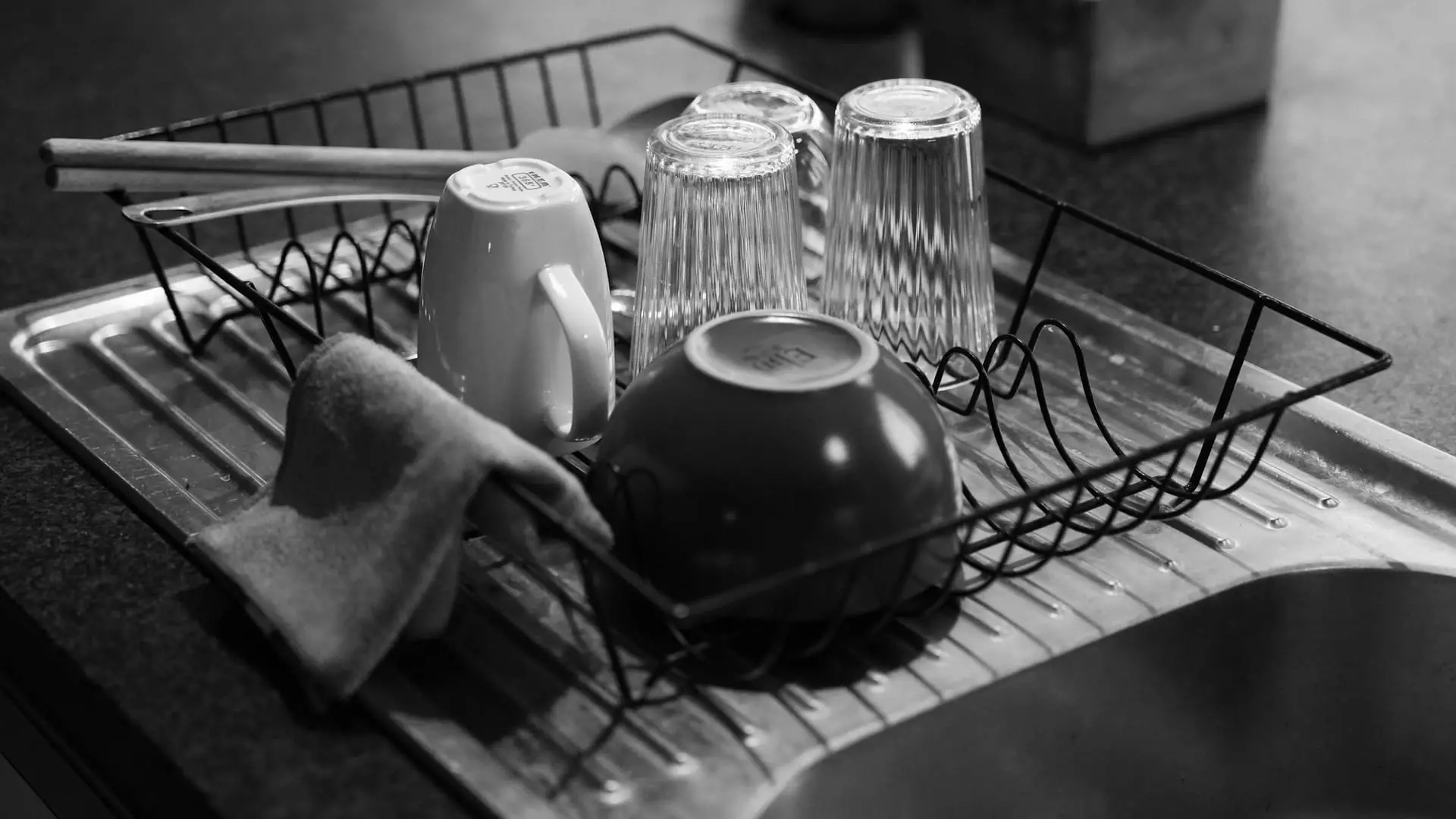
For dishes and laundry, Low Power is specific. Dishes: wash one usable set, meaning a cup, a bowl or plate, a utensil, and whatever pan you need next. Laundry: wash just what the coming two days need. A basket of clean clothes is a perfectly valid home for them.
- Current
- Counter and entry clear. Dishes for tomorrow's breakfast washed.
- Next
- Run one load of work clothes.
- Check
- Tomorrow after dinner.
Make the next reset shorter
Once the home is usable again, make one small change so the next reset is shorter. The book's tools for that are short item journeys, meaning the steps an object takes from being used to being put back, and storing things where they get used.
Any of those steps can be where an item stalls, so cut steps: a laundry basket where clothes come off, a mail tray at the entry, cleaning supplies stored safely near use. Safety comes first, so never make medication, chemicals, sharp objects or sensitive documents easier to reach for children, pets or anyone at risk.
If you share a home, one person should not silently carry all the noticing. The book suggests making it specific: which function has to keep working, whose job the next action is, what counts as done enough, and what happens on low-capacity days.
Judge the system by how fast it comes back
Dana had built systems like this three times before, and they collapsed. Each collapse was information about the design rather than about her. Judge a home system by restart latency: think of the worst week this past month and ask how long it took before the kitchen worked again and you knew the next action. If that is longer than the window you can afford on a bad week, simplify until it fits.
Questions people ask
How do I clean my house when I have ADHD and no energy?
Skip sorting and whole rooms. Remove trash, spoiled food and anything unsafe, rescue any wet laundry, clear one path from the door, restore one surface where food gets made, and wash only the tools for the next meal. Leave a short note on that surface saying what comes next, then stop. The aim is a home that works tonight.
Why do my home organizing systems always fall apart?
Most home systems are designed on a good day for a finished room, and they only work if every item goes back every time. Putting things back is the step that needs the most capacity, so the first hard week breaks it. A system needs a Low Power version and a Restart, not just a picture of the finished room.
What is the minimum I need to keep my home functional with ADHD?
A working home has a clear exit, a visible home for keys and essentials, one usable food surface, one usable set of dishes, a bed you can sleep in, needed medication accessible to the right person and safely stored, and clothes you can find. On low-capacity days, function matters more than how the rooms look.
How do I keep up with dishes and laundry with ADHD?
Shrink them on hard weeks. For dishes, wash one usable set: a cup, a bowl or plate, a utensil, and the pan you need next. For laundry, wash only what the coming two days need, and let a basket of clean clothes count as their home. Do the full cycle again when capacity returns.
Sources and further reading
- National Institute for Health and Care Excellence. Attention deficit hyperactivity disorder: diagnosis and management. NG87. 2018, updated 2019. Open source
How claims on this site are graded, from established to personal experiment: Research.